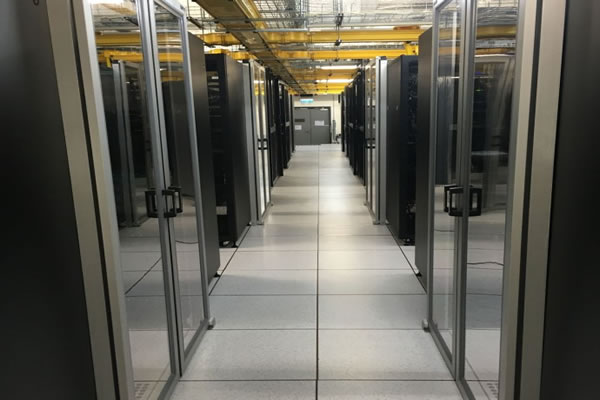
in today's digital age, servers play a crucial role as the core of information technology infrastructure. especially in the united states, server production and supply chain management have always been the focus of industry attention. this article will conduct in-depth comparison, analysis and evaluation of the output of the four major american servers, aiming to provide a reference for enterprises to choose the right server.
us server market overview
the us server market occupies an important position worldwide, with major manufacturers including four giants: ibm, dell, hp and cisco. these companies have extensive experience and technical accumulation in the design, production and sales of server hardware. the fierce competition in the market not only promotes continuous technological innovation, but also enables major manufacturers to continuously optimize output and performance to meet the growing user needs.
ibm server production analysis
as a pioneer in the server industry, ibm has always maintained a high market share with its strong technical strength and rich product line. its server products include hosts, blade servers and tower servers, which can meet the needs of different enterprises. in recent years, ibm's layout in the fields of cloud computing and artificial intelligence has led to a steady growth in its server output, especially in the field of high-performance computing (hpc). ibm's products have performed particularly well.
dell server output comparison
dell has won a wide user base in the market for its flexible customized services and high cost performance. its server products cover a variety of models from entry-level to enterprise-level, suitable for the needs of enterprises of different sizes. with the development of cloud computing and big data technology, dell's server output is also increasing, especially in hyper-converged infrastructure (hci), which shows strong competitiveness.
hp server production evaluation
as the world's leading server manufacturer, hp's products are known for their stability and reliability. hp's server series includes the proliant series and the apollo series, which are widely used in enterprise-level solutions. in recent years, hp has continuously introduced innovative technologies such as integrated security features and intelligent management systems, which have driven the production growth of its servers. especially in the small and medium-sized enterprise market, hp's products are favored for their ease of management and maintenance.
cisco server production analysis
cisco started out with network equipment and has actively expanded the server market in recent years and launched a number of high-performance servers. cisco's unified computing system (ucs) combines computing, networking and storage to provide a comprehensive solution. despite its relatively small output in the server market, its unique network integration capabilities give cisco a significant advantage in the data center field, especially in large-scale cloud computing environments.
comprehensive comparison of four major servers
through the production analysis of ibm, dell, hp and cisco, it can be seen that major manufacturers have their own characteristics in the server market. ibm is leading in high-performance computing, dell attracts users with its flexible customized services and cost-effectiveness, hp has won the trust of enterprise customers with its stability and reliability, while cisco has unique advantages in network integration. when choosing a server, the company should comprehensively consider the characteristics of each brand based on its own needs, budget and technical requirements.
summary and suggestions
in the comparison and analysis of the output of the four major american servers , we can see that major manufacturers have their own advantages in the market and are suitable for the needs of different types of companies. when choosing a server, the company should fully consider its own operating model and technical needs and choose the most suitable product. at the same time, it is recommended to conduct sufficient market research before purchasing to understand the product characteristics and service support of each brand to ensure that the selected server can effectively support the business development of the enterprise.
- Latest articles
- Popular tags
-
Affordable U.S. High-defense Server Operation And Maintenance Strategy Includes Automation And Cost Optimization Methods For Monitoring
Introducing affordable operation and maintenance strategies for high-defense servers in the United States, focusing on automation and cost optimization methods for monitoring. Covering architecture design, tool practices, monitoring metrics, and elastic scaling helps reduce total operations costs and improve availability. -
Which Server Is Best To Use To Improve Website Performance When Purchasing A US Site Group?
This article discusses how to choose a server suitable for the US site group to improve website performance and help SEO optimization. -
From A Storage Perspective, The Cost And Efficiency Of Supporting 4T Partitions On U.S.-based High-security Servers
From a storage perspective, this analysis examines the cost structure and efficiency impacts of U.S.-based high-security servers supporting 4T partitions, covering key factors such as disk types, RAID strategies, IOPS/throughput, backup, and networking, while providing optimization recommendations.